


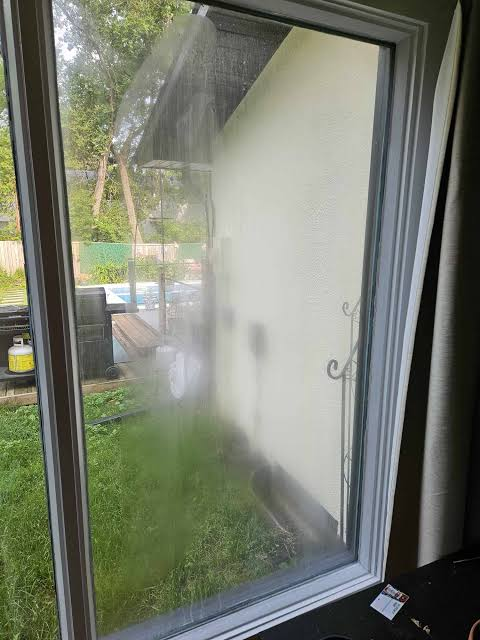
If there’s a cloudy haze or water droplets between the two panes of a dual-pane window, the seal around that glass unit has failed. You can’t wipe it off, and it rarely clears up for good. The fix is new glass, not cleaning. Whether that means a glass-only repair or a whole new window depends on how many windows are fogging and what kind of frames you have. This guide walks through both, honestly, including when you don’t need us.
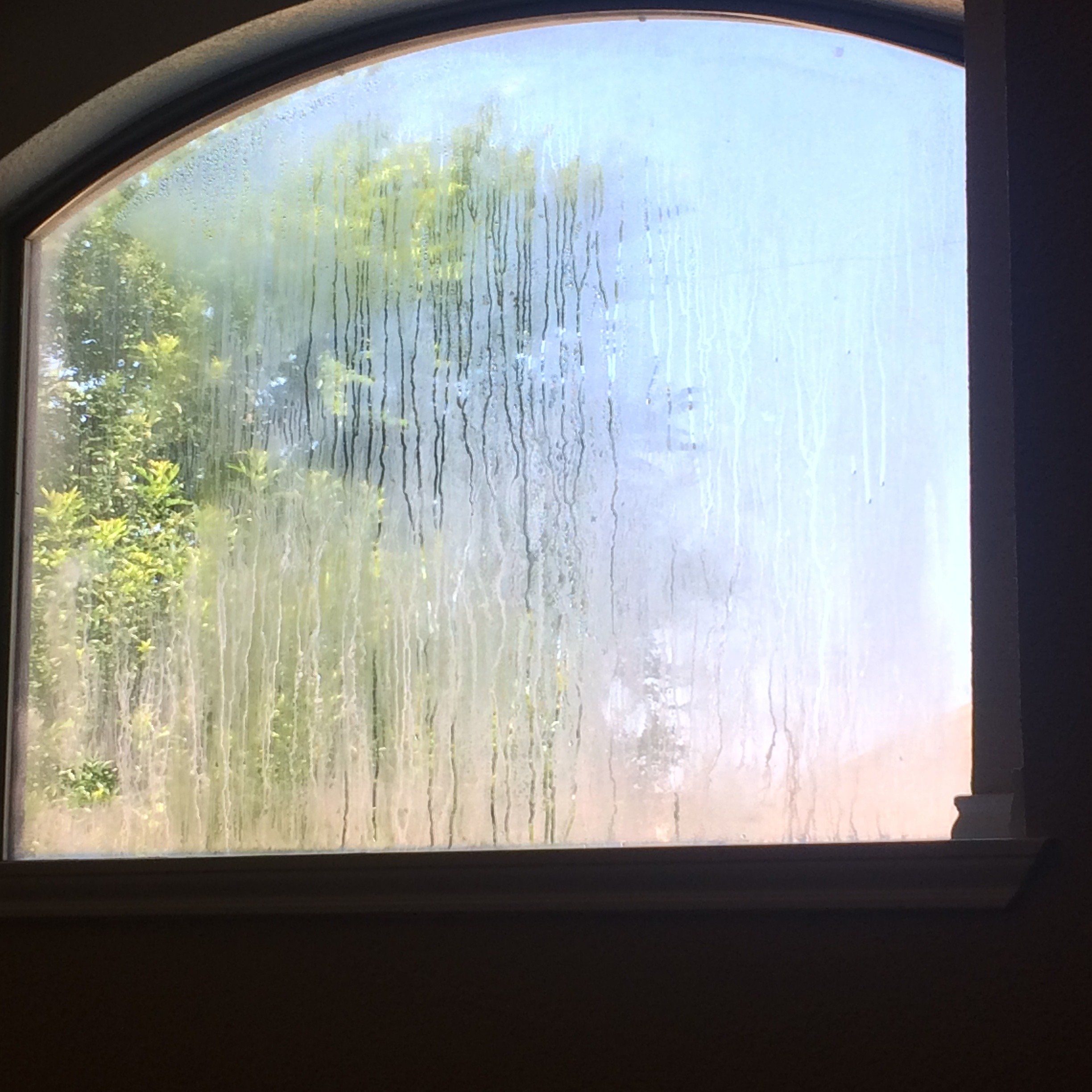
First, Make Sure the Fog Is Really Inside the Glass
Wipe both sides of the glass with a dry cloth. Where the moisture sits tells you what’s going on:
- On the inside surface (room side): that’s indoor humidity, usually from cooking, showers or a swamp cooler. The window isn’t broken.
- On the outside surface: dew on a clear, still morning is normal, and it’s most common on well-insulated low-E glass. Anlin says outside condensation can show your windows are “performing exactly as designed” (Anlin).
- Between the panes: that’s a failed seal. The glass unit needs to be replaced.
Why Dual-Pane Seals Fail
A dual-pane window is two sheets of glass sealed to a spacer around the edge, usually with argon gas inside and a drying agent (desiccant) in the spacer. Over the years, a little moisture works through the seal. Once more gets in than the desiccant can absorb, it shows up as fog.
Phoenix sun adds stress. As the sun heats the gas between the panes, it expands; at night it contracts. Inspectors call this thermal pumping, and windows on the sunny side of a house see the biggest swings. In 2024, Phoenix hit 110°F or hotter on 70 days, against a typical 21 (KJZZ).
Heat isn’t the whole story, though. A 25-year industry field study that included Phoenix found that performance “varied little from hot to cold or wet to dry climates.” What did matter was water: glass units that sat in trapped water at the edge failed early (Glass Canada on the IGMA study). That’s why clear weep holes and clean sliding tracks matter as much as the sun.
How common is it? In that long-term study, 4.9% of units had fogged at 10 years, 7.9% at 15 and 9.2% at 25. The best-made units did much better (Lingnell & Spetz, ASHRAE).
Does a Foggy Window Cost You Energy?
Some. Argon is part of what makes a dual-pane window insulate. One engineering bulletin puts a low-E, argon-filled unit at about R-4.2 versus R-3.3 with plain air, a 25% difference you lose as the gas escapes (RDH Building Science). Moisture can also corrode the silver low-E coating from the edge in, and that coating is what blocks Phoenix sun.
The bigger costs are usually the view and what the fog says about the window’s age. Long-term fog can leave mineral deposits on the inside of the glass, so it stays cloudy even on dry days.
Your Three Options
| Defog service | New glass unit only | New window | |
|---|---|---|---|
| What happens | A hole is drilled, the space is dried and vented | The sealed glass unit is replaced in your existing frame | The whole window is replaced |
| Fixes the view | Often, at least for a while | Yes | Yes |
| Restores insulation | No | Yes | Yes |
| Typical turnaround | Varies by company | A few days to about two weeks | Custom windows are made to order |
| Best for | Rarely the best choice | One or two fogged units in good frames | Many failing units, old aluminum frames |
Defogging clears the view but leaves a broken seal behind. Inspectors note it “might not provide any additional insulation,” and it doesn’t work with gas-filled units, since the gas is already gone (InterNACHI). Tempered glass can’t be drilled at all, and drilling may count as an alteration under your window warranty.
A new glass unit is the right fix for one or two fogged panes in frames that still work well. A glass shop measures the unit, orders a new one and swaps it into your existing sash. Phoenix glass companies quote anywhere from a few business days to about two weeks.
A new window makes more sense when:
- Several windows are fogging, which often means the rest are the same age.
- Your frames are old aluminum, especially non-thermally broken, which conducts heat straight through.
- Sliders stick, frames are bent, or there are leaks around the window.
- You’d like to use SRP’s window rebate. It’s for new ENERGY STAR-rated windows, so a glass-only repair doesn’t qualify (our SRP rebate guide).
When to Call a Glass Shop Instead of Us
We replace whole windows, with a two-window minimum. If you have one or two foggy units in frames that otherwise work well, a local glass shop will usually be the better deal, and we’d rather tell you that up front.
Check Your Warranty Before You Pay for Anything
Most window makers warranty the sealed glass unit against fogging, but the terms vary a lot (Anlin’s warranty booklet is one example). Some cover the glass, parts and labor for as long as the original owner owns the home. Newer product lines often cover 10 or 20 years, with labor only in the first years. Coverage often depends on the manufacture date, and some warranties only transfer to a new owner if the maker is notified after the sale. Look for the brand name on the spacer bar between the panes, then find that maker’s warranty. Don’t let anyone drill the glass first.
Safety Glass Rules Still Apply
Replacement glass has to meet today’s safety glass rules. Glass in doors, next to doors, near tubs and showers, and in large panes close to the floor generally has to be tempered or otherwise safety-rated under the residential building code (Penn State PHRC summary of IRC R308.4). A good glass shop will order the right type.
How to Help Your Windows Last
- Keep weep holes and tracks clear. Anlin’s care guide says to keep weep holes “clear of dirt, stucco, sand and debris.” After a dust storm, vacuum the tracks.
- Don’t pressure-wash the edges of the glass or let sprinklers soak the window.
- Choose windows built and installed to drain. Ask how water gets out of the frame, not just how it’s kept out.
For more on what makes a dual-pane window perform, read the benefits of dual-pane windows in Phoenix and our guide to glass types.
Frequently Asked Questions
Can you fix foggy double-pane windows?
Yes. The lasting fix is to replace the sealed glass unit or the whole window. Defogging services can clear the view, but they don’t restore the seal or the insulating gas.
Will the fog go away on its own?
No. It may come and go with the weather, but once the seal has failed it gets worse over time, and minerals can leave a permanent haze.
Is a foggy window dangerous?
No. It’s a performance and appearance problem, not a safety one. Cracked glass is different: replace it promptly.
Do I need to replace every window if one is foggy?
No. If the rest are clear and the frames work well, replace only the failed glass unit. If several are fogging and the frames are old, whole-window replacement is usually the better long-term spend.
Several foggy windows, or old aluminum frames? Call us at (602) 678-3737 or request a free, no-pressure estimate. Our employee installers are paid hourly to get the job done right.